
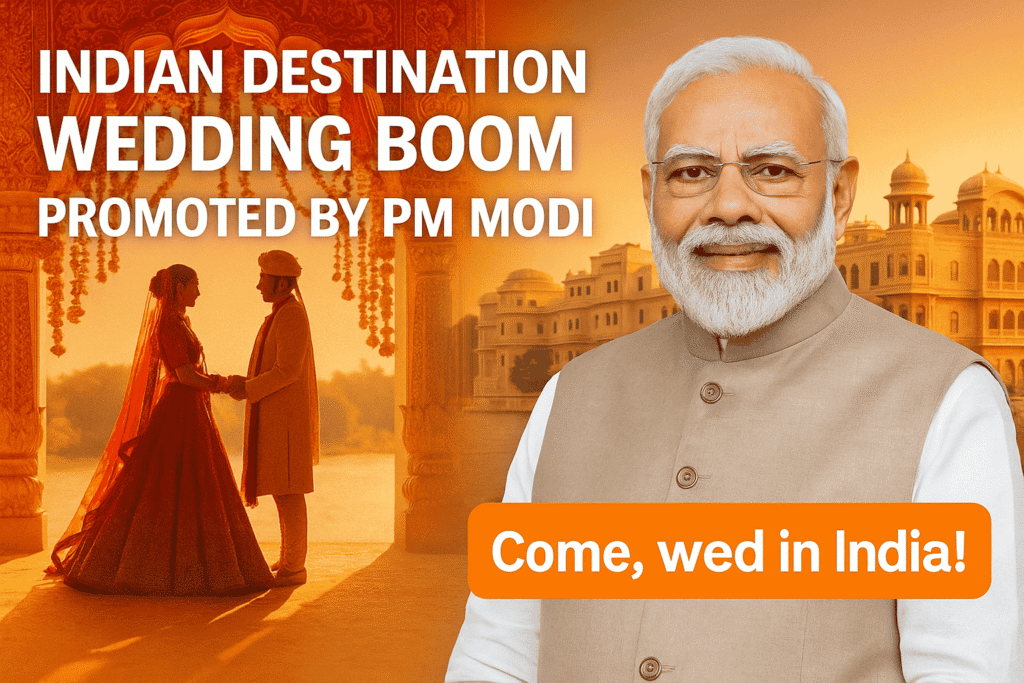
Highlights Uttarakhand, Udaipur, Goa & Kerala as Top Wedding Destinations
Prime Minister Narendra Modi, in the 128th episode of Mann Ki Baat on Sunday, launched a new slogan — “Wed in India” — encouraging families to choose Indian destinations for weddings instead of going abroad.
Key Highlights
- “Wed in India” officially launched during Mann Ki Baat Episode 128.
PM Modi promoted Uttarakhand’s scenic wedding spots like Auli and Chopta, calling them world-class venues.
Also showcased Udaipur’s royal palaces, Goa’s beaches, and Kerala’s serene backwaters as premium wedding destinations.
Modi stressed that choosing India for weddings boosts local economies, supporting sectors like hospitality, transport, tourism, and artisans.
Winter tourism in Uttarakhand is booming, with initiatives like the Adi Kailash ultra-marathon drawing more visitors.
Uttarakhand’s tourist numbers have jumped from 2,000 to 30,000 in just three years.
The Uttarakhand Chief Minister’s Office praised PM Modi as the state’s biggest tourism ambassador.
Modi linked the message to the upcoming Kashi Tamil Sangamam, stressing stronger cultural bonds across India.
PM Modi’s Post on X
Come, wed in India!#MannKiBaat pic.twitter.com/sCz2VhLS2M
— Narendra Modi (@narendramodi) November 30, 2025
Why This Matters
The “Wed in India” message isn’t just cultural — it is a push to strengthen India’s tourism, jobs, and local businesses. As destination weddings become more popular, PM Modi’s call aims to ensure this booming industry benefits Indian communities instead of foreign economies.
