
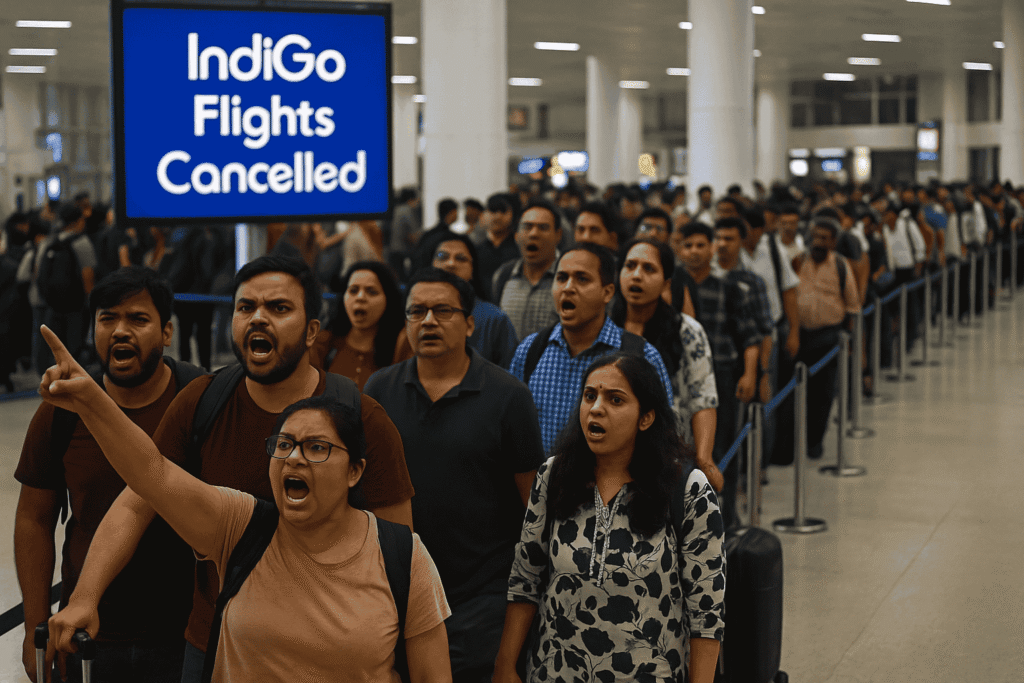
Over the past few days, IndiGo — India’s largest domestic airline — has scrambled to explain a wave of cancellations and delays that left thousands of travellers stranded. The root of the disruption: new pilot rest and duty-hour regulations (the Directorate General of Civil Aviation’s “FDTL” rules) came into full force recently, forcing stricter limits on night-time landings and weekly working hours.
IndiGo’s scale — hundreds of flights daily, often in high-frequency, overnight cycles — made adjustment painful. With limited crew and tight scheduling, many flights simply couldn’t be covered. On some days, only a fraction of their usual services took off.
The result: airports across the country turned chaotic. Cancellations surged into the hundreds per day, and on-time performance plunged. Angry travellers flooded social media with complaints of long waits and uncertain rebookings.
In response, IndiGo’s CEO Pieter Elbers publicly apologized for the disruption, calling it a “necessary reset” and promising to stabilize operations soon. The government temporarily relaxed the night-duty restrictions for IndiGo — but only to help the airline recover, not revoke the safety norms themselves.
Message from Pieter Elbers, CEO, IndiGo. pic.twitter.com/bXFdqoB0Q2
— IndiGo (@IndiGo6E) December 5, 2025
For now, travellers: double-check your flight status, be ready for delays or cancellations, and expect rebookings or refunds if things go awry. It’s a stark reminder that safety regulations — even when necessary — can have major ripple effects if airlines aren’t prepared.
